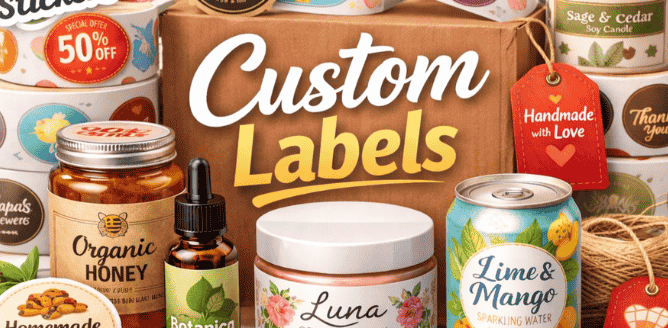
In today’s competitive marketplace, creating a strong brand identity is more critical than ever. One of the most effective yet often overlooked tools for building recognition and professionalism is custom labels. These small design elements do more than just convey information—they tell your brand’s story, establish credibility, and leave a lasting impression on customers. Whether you are running a small craft business, launching a food product, or managing an e-commerce store, custom labels can elevate your products in ways generic labels simply cannot.
Custom labels provide a unique opportunity to communicate your brand’s personality directly through your packaging. From the choice of colors and fonts to the material and finish, every detail can influence customer perception. A well-designed label can encourage repeat purchases, boost sales, and even serve as a conversation starter. Beyond aesthetics, custom labels also play a practical role, ensuring your products comply with legal regulations, convey essential product information, and enhance usability.
In this guide, we’ll explore everything you need to know about custom labels, including their types, design elements, printing processes, cost considerations, common mistakes to avoid, and emerging trends. By the end, you will have a comprehensive understanding of how to leverage custom labels to strengthen your brand, engage your audience, and make your products stand out on the shelf.
Types of Custom Labels: Choosing the Right Format for Your Products
Product Labels
Product labels are the most common type of custom labels. They are applied directly to the product packaging to provide essential information such as ingredients, weight, usage instructions, and brand details. These labels are especially important for food, beverages, cosmetics, and health products, where compliance with regulatory standards is required. High-quality product labels not only communicate information but also attract customer attention, making them an integral part of product marketing.
Branding Labels
Branding labels are focused primarily on enhancing your brand identity. Unlike functional product labels, these labels may include your logo, tagline, or signature design elements that reinforce brand recognition. For example, a luxury candle brand may use embossed or foil-stamped labels to create a premium look that differentiates it from competitors. Branding labels are versatile and can be applied to packaging, gift wrapping, or promotional items to maintain a cohesive brand image.
Informational Labels
Informational labels are designed to provide additional details about a product, often beyond the basic requirements. This can include instructions, warnings, nutritional facts, or QR codes that link to online resources. Informational custom labels are particularly valuable for products with complex usage guidelines, health considerations, or technical specifications. They enhance customer trust by ensuring transparency and accuracy.
Decorative Labels
Decorative custom labels serve primarily an aesthetic function. These labels are designed to enhance visual appeal and create an emotional connection with the customer. Examples include seasonal packaging labels, limited-edition designs, or labels with intricate artwork for artisanal products. While decorative labels may not always carry functional information, they contribute significantly to perceived value and brand prestige.
Specialty Labels
Specialty custom labels are tailored for specific conditions or industries. This includes waterproof labels for outdoor products, heat-resistant labels for kitchenware, or tamper-evident labels for pharmaceuticals. Choosing the right specialty label ensures durability and maintains product integrity while reinforcing your brand’s professionalism and attention to detail.
Key Elements of Effective Custom Labels
Clear Branding and Logo Placement
Your logo is the cornerstone of brand recognition, and its placement on your custom labels should be strategic. A prominently positioned logo helps customers quickly identify your product and differentiate it from competitors. The size, color, and style of the logo should be consistent with your overall branding to create a cohesive visual identity.
Typography and Readability
The font style, size, and spacing of your custom labels are critical for readability. Clear typography ensures that customers can quickly understand essential information without frustration. Avoid overly decorative fonts for key details and reserve them for accent text or branding elements. Balancing aesthetic appeal with readability is key to effective label design.
Color Scheme and Visual Appeal
Color plays a psychological role in shaping customer perception. Choosing the right color palette for your custom labels can evoke emotions, signal product type, and align with your brand personality. For instance, green often communicates natural or eco-friendly products, while bold colors like red and orange can convey excitement or urgency. Harmonious colors, combined with contrasting accents, can make your labels visually striking without overwhelming the eye.
Material Selection
The material of your custom labels significantly impacts both appearance and durability. Common options include paper, vinyl, polyester, and kraft materials, each offering unique textures and finishes. Paper labels are cost-effective and versatile, vinyl labels are waterproof and long-lasting, while kraft labels give a rustic, artisanal feel. Choosing the right material depends on your product type, target audience, and usage conditions.
Shape and Size
Custom labels come in a variety of shapes and sizes, from standard rectangles and circles to unique die-cut designs. The shape and size should complement the packaging and product while enhancing visual appeal. Unconventional shapes, such as hexagons or custom silhouettes, can make your product stand out on the shelf and leave a memorable impression.
Regulatory and Legal Information
For many products, including food, beverages, and cosmetics, regulatory compliance is mandatory. Custom labels should include essential legal information such as ingredients, nutritional facts, barcodes, expiration dates, and any warning labels required by law. Properly including this information not only avoids legal issues but also builds customer trust.
The Designing Process: Creating Custom Labels That Captivate
Understanding Your Audience
Before designing your custom labels, it is crucial to understand your target audience. Consider demographics, preferences, and buying behavior. Are your customers looking for luxury and elegance, or do they value simplicity and eco-friendliness? This insight will guide your design choices, from colors and fonts to materials and label finishes.
Sketching and Conceptualization
Start the design process by sketching ideas or creating mood boards. Conceptualization allows you to visualize how your labels will look on the actual product. During this stage, experiment with layout, typography, color schemes, and imagery. Multiple concepts give you options to refine and select the most impactful design.
Incorporating Branding Elements
Ensure that all branding elements, including logos, taglines, and brand colors, are incorporated cohesively. A consistent brand identity across all custom labels strengthens recognition and creates a professional appearance. Avoid cluttering the design; every element should serve a clear purpose.
Prototyping and Feedback
Creating prototypes of your custom labels is essential before mass production. Print sample labels and apply them to products to assess fit, readability, and overall aesthetics. Gather feedback from team members, focus groups, or loyal customers to make informed adjustments. Prototyping minimizes costly errors and ensures that the final labels resonate with your audience.
Digital Design Tools
Modern design tools simplify the creation of custom labels. Software like Adobe Illustrator, Canva, or specialized label design applications provide templates, vector graphics, and precise layout controls. Using professional tools allows for high-resolution designs suitable for various printing techniques and ensures that your labels maintain quality during production.
Printing Custom Labels: Methods, Techniques, and Finishes
Digital Printing
Digital printing is ideal for small batches or products requiring frequent design changes. It offers high-quality, full-color prints with precise detail and allows for quick turnaround times. Digital printing is cost-effective for limited runs and offers flexibility in incorporating variable data, such as serial numbers or batch information.
Offset Printing
Offset printing is a traditional technique suited for large-scale production. It provides superior color accuracy and consistency, making it ideal for brands that require exact color matching across multiple labels. While offset printing has higher setup costs, it becomes more economical for bulk production due to lower per-unit costs.
Flexographic Printing
Flexographic printing is widely used for packaging labels, especially on non-paper materials like plastic, foil, and films. It is efficient for high-volume runs and can handle various ink types, including metallic and UV-reactive inks. Flexographic labels are durable and resistant to moisture, making them suitable for food, beverage, and cosmetic products.
Specialty Finishes
Specialty finishes add a premium touch to custom labels. Options include matte, gloss, or satin finishes, as well as embossing, debossing, foil stamping, and spot UV coating. These finishes enhance the tactile and visual appeal of your labels, helping products stand out on shelves and reinforcing brand perception.
Self-Adhesive vs. Non-Adhesive Labels
Most custom labels are self-adhesive, allowing easy application to products. However, non-adhesive labels, such as hang tags, are also popular for clothing or gift items. Selecting the right adhesive type ensures labels remain secure during handling, shipping, and storage, maintaining their professional appearance.
Cost Considerations: Balancing Quality and Budget
Factors Influencing Cost
The cost of custom labels varies based on several factors, including material choice, printing method, label size and shape, and specialty finishes. Digital printing is generally more affordable for small runs, while offset or flexographic printing becomes cost-effective at larger volumes. Additionally, intricate designs or custom shapes may increase setup costs but add value through differentiation.
Budget-Friendly Tips
Small businesses can manage costs by ordering standard label sizes, limiting the use of specialty finishes, and opting for durable but affordable materials. Combining different printing methods—such as digital for small runs and offset for bulk orders—can optimize both quality and budget. Planning ahead and ordering in bulk when possible reduces per-unit costs and ensures consistent branding across multiple product batches.
Common Mistakes to Avoid When Using Custom Labels
Overcrowding the Design
One of the most common mistakes is overcrowding labels with too much information or decorative elements. Overly busy labels confuse customers and reduce readability. Focus on key details, maintain clear hierarchy, and ensure white space enhances the design rather than making it appear empty.
Ignoring Material and Durability
Choosing the wrong label material can compromise product presentation. For example, paper labels may peel or tear on products exposed to moisture, while vinyl or polyester labels provide longevity. Always consider the product’s storage, handling, and environmental conditions when selecting materials.
Neglecting Brand Consistency
Inconsistent branding across products undermines professionalism. Labels should consistently reflect your logo, fonts, color palette, and messaging. Variations in style or quality can confuse customers and dilute brand recognition, reducing long-term impact.
Failing to Test Prototypes
Skipping prototype testing can lead to costly errors. Issues like misaligned text, poor adhesion, or colors that look different in print can damage credibility. Testing labels on actual products ensures they meet quality standards and effectively communicate the intended message.
Examples of Successful Custom Labels
Food and Beverage Products
Many artisanal food brands leverage custom labels to highlight natural ingredients, unique flavors, or locally sourced products. A craft jam company, for example, might use rustic kraft labels with hand-lettered fonts to evoke an artisanal feel, while still including clear nutritional information.
Beauty and Cosmetics
In the beauty industry, packaging aesthetics significantly influence purchasing decisions. Custom labels with metallic foils, soft-touch finishes, or embossed logos communicate luxury and exclusivity, making products more appealing on shelves or online stores.
Small Businesses and Startups
For small businesses, custom labels offer a cost-effective way to stand out and establish credibility. Handmade soaps, candles, or beverages with visually appealing labels demonstrate professionalism, enhance gifting appeal, and encourage repeat purchases.
Trends in Custom Labels: Staying Ahead of the Curve
Eco-Friendly and Sustainable Labels
With growing consumer awareness of environmental impact, eco-friendly labels are gaining popularity. Materials like recycled paper, biodegradable adhesives, and vegetable-based inks appeal to environmentally conscious customers and reinforce sustainable brand values.
Interactive and QR Code Labels
Modern labels are increasingly interactive. QR codes, augmented reality features, and scannable URLs allow customers to access recipes, tutorials, or loyalty programs directly from the label, enhancing engagement and offering added value.
Minimalist and Elegant Designs
Minimalist designs continue to trend across industries. Clean layouts, restrained color palettes, and subtle typography create a sophisticated and timeless look, appealing to consumers who value simplicity and elegance over cluttered designs.
Personalized and Limited Edition Labels
Personalization is becoming a key differentiator. Limited edition labels, seasonal designs, or customer-specific variations make products feel exclusive, driving demand and fostering stronger emotional connections with the brand.
Conclusion: Unlocking the Power of Custom Labels for Your Brand
Custom labels are more than decorative elements—they are powerful marketing tools that communicate your brand identity, provide essential information, and enhance product appeal. From choosing the right type, material, and printing technique to designing visually compelling and compliant labels, every decision matters. Investing time and resources into well-crafted custom labels can significantly impact customer perception, increase sales, and reinforce brand loyalty.
Whether you are a small business owner, a craftsperson, or a large-scale manufacturer, understanding the nuances of custom labels equips you to make informed choices that align with your brand vision. By avoiding common mistakes, embracing innovative trends, and prioritizing quality, your labels can leave a lasting impression and help your products shine in a crowded marketplace.