
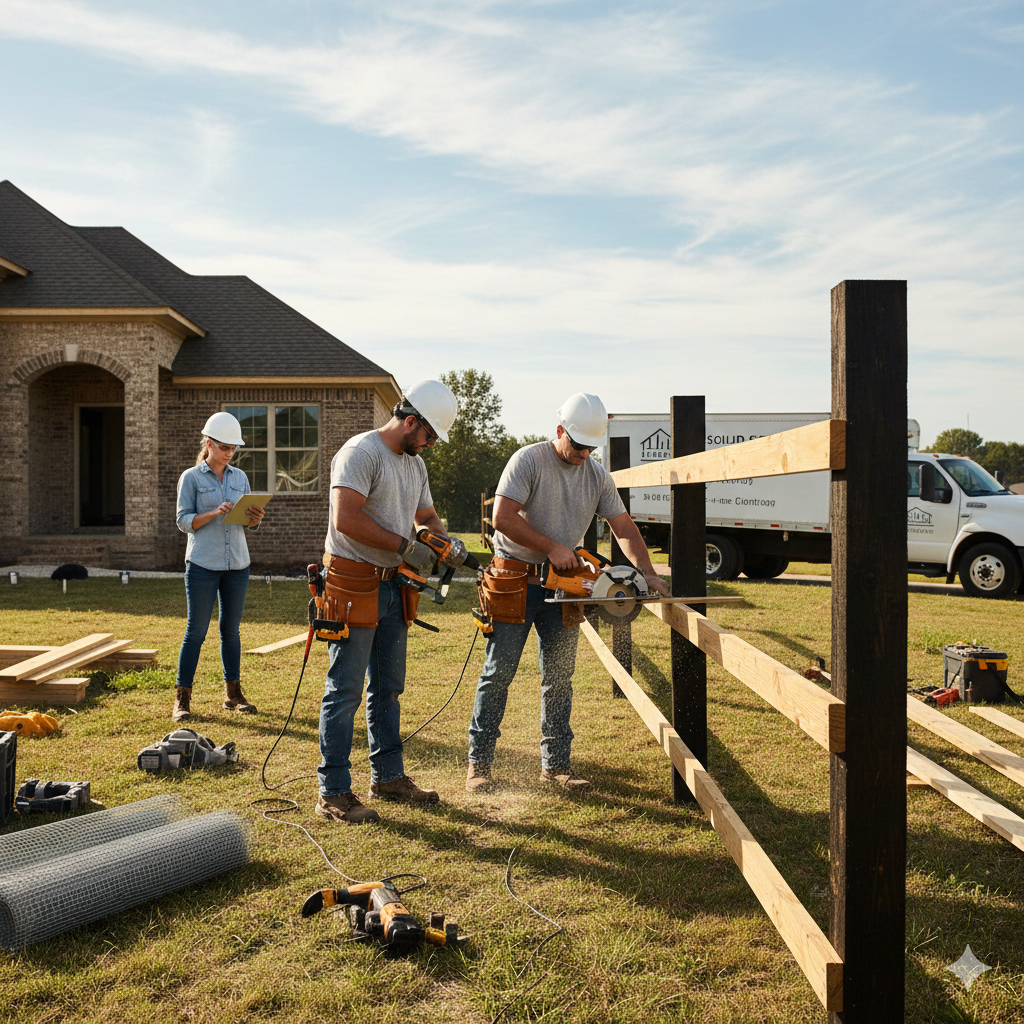
You want a fence that fits your budget, style, and purpose without surprises. A qualified fencing contractor handles permits, site prep, material selection, and professional installation so your fence looks right and lasts longer.
Knowing what services fencing contractors offer and how to compare estimates saves you time and money. This article walks through common services, what to ask during quotes, and practical tips for choosing the right pro so you can make a confident decision.
Fencing Contractor Services
You’ll find options for property security, aesthetic choices, material selection, and ongoing care. The following details show typical services, steps, timelines, and what you should expect in cost and workmanship.
Residential Fencing Solutions
You get tailored fence types for yards, pools, pets, and privacy. Contractors commonly offer wood (privacy and picket), vinyl (low maintenance), chain-link (affordable containment), and aluminum/steel (durable, decorative). Specify height, gate count, and local code requirements up front so the quote reflects permits and setbacks.
Expect a site visit to mark property lines and examine soil, slope, and underground utilities. Contractors will recommend post depth and spacing—typically 30–48 inches deep for wood posts in frost-prone areas—and provide a written estimate with timelines and material brands. Ask about warranties on materials and workmanship, and whether they include cleanup and removal of old fencing.
Commercial Fencing Services
You need security, access control, and durability for commercial sites. Contractors supply chain-link with barbed or razor wire, welded wire, palisade, and high-security steel panels. They also install access systems: vehicular gates, card readers, and automatic operators rated for heavy use.
Expect project planning to include mounting for concrete curbs, bollards, and integration with CCTV or lighting. Contractors should provide specifications for wind load, anti-corrosion coatings, and maintenance intervals. Request references for similar commercial projects and confirmation of contractor insurance, bonding, and compliance with local commercial codes.
Fence Installation Process
You want a predictable sequence from estimate to final inspection. Installation typically follows: site survey and utility locates; permit procurement if required; layout and post excavation; setting posts in concrete; panel or board installation; gate hanging and hardware fit; final adjustments and cleanup. Timelines vary—small residential jobs often finish in 1–3 days; larger or commercial sites may take several weeks.
Communicate schedule constraints and access points before work starts. Confirm how the crew will handle existing landscaping, driveways, and irrigation lines. Get a written timeline, payment schedule (commonly deposit, mid-job, final), and a punch-list walkthrough to record defects before final payment.
Fence Repair and Maintenance
You should plan routine checks and timely repairs to extend service life. Contractors repair broken posts, replace rotted or rusted sections, re-tension chain-link fabric, and reset leaning gates. They offer staining, painting, and protective coatings for wood and metal to slow weathering and corrosion.
Ask about seasonal maintenance packages and response times for emergency repairs after storms. Request cost estimates for common repairs and whether labor or materials carry separate warranties. Keep records of service dates, materials used, and any serial numbers for hardware or gate operators for warranty claims.
Choosing the Right Fencing Contractor
You should verify credentials, inspect past work, and read client feedback to confirm quality, timelines, and warranty practices. Focus on concrete evidence: licenses, photos of completed projects, and specific client comments about communication and durability.
Assessing Qualifications and Experience
Check for a valid contractor license and any required local permits for fencing work in your area. Ask for proof of insurance (liability and workers’ comp) so you won’t be liable for on-site injuries or damage.
Look for experience with your fence material and terrain. If you need vinyl installed on clay soils or a grade-following picket on a slope, confirm the contractor has completed similar jobs and can show before/after photos.
Request details about crew size, subcontractors, and estimated timelines. Ask whether they handle site preparation, post-setting methods (concrete vs. compacted backfill), and permit pulls. These specifics predict schedule reliability and long-term performance.
Reviewing Client Testimonials
Prioritize recent, detailed reviews that mention project scope, communication, and whether the job finished on schedule. Reviews that specify fence type, setbacks, and how disputes were resolved give you useful context.
Contact at least two past clients and ask about workmanship, cleanup, and whether the contractor honored the warranty. Ask direct questions: Did the crew arrive when promised? Were posts still plumb after a year? Did the contractor respond promptly to warranty requests?
Cross-check reviews on multiple platforms (Google, Houzz, Yelp) and look for consistent praise or recurring complaints. Avoid basing decisions on a single five-star or one-star review.
Comparing Project Portfolios
Ask for a portfolio organized by fence type, material, and problem solved (privacy, pet containment, erosion control). A well-documented portfolio shows technical range and attention to detail.
Evaluate photos for post spacing, gate hardware quality, and how the fence ties into existing structures. Look for close-up shots of footings and finished gate latches; these reveal workmanship more than wide-angle images.
Request references for projects similar to yours and note project size, timeline, and any change orders. Use a simple comparison table to score candidates on price, schedule, materials, and warranty before making your final choice.