You rely on school bus transportation to get children to school safely and on time, and this article shows how those systems actually work and how they can work better for your family and community. School buses transportation remain one of the safest, most efficient ways to move students daily, and understanding routing, eligibility, and operational choices helps you spot opportunities for improved reliability and safety.
You will learn what drives route planning, who qualifies for service, and practical steps districts and parents take to optimize fleet use and reduce disruptions. Expect clear, actionable explanations that prepare you to ask the right questions of your local transportation provider and advocate for smarter, safer service.
Understanding School Bus Transportation
You’ll learn how school buses protect students, what service types exist, and which rules govern operations and eligibility. The next parts explain safety roles, service options, and regulatory requirements you’ll encounter.
Role in Student Safety
School buses reduce exposure to traffic by delivering students directly to school property or designated stops. Buses use high-visibility markings, flashing lights, and stop-arms to control traffic during loading and unloading, and you should expect drivers trained in student management and emergency procedures.
Seating and capacity rules limit standing passengers and require use of seats or compartmentalized seats on newer buses to reduce injury risk. Maintenance protocols—daily inspections, brake checks, and periodic safety audits—keep vehicles roadworthy. You should also follow school-specific rules for behavior at stops and on board; these rules are part of the safety system and help drivers maintain focus and predictable conduct.
Types of School Bus Services
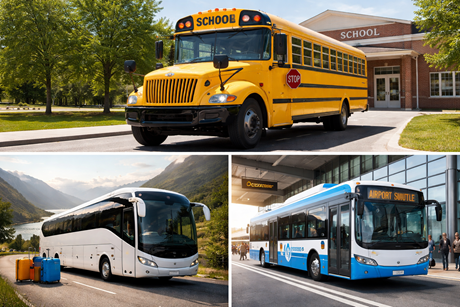
Traditional yellow school buses serve fixed, multi-stop routes for regular home-to-school transport. These routes often follow eligibility rules based on student grade and distance from school—examples include shorter distance thresholds for JK/SK and longer ones for high school students.
Activity or multifunction school activity buses (MFSABs) handle one-time or extracurricular trips with limited passenger control needs and usually originate from a single pickup point. Districts may supplement with school-purpose vans, public transit passes, or caregiver-based routes that require daily use and registration at the serving school. You should check your district’s published modes so you know which vehicle and rules apply to your child.
Regulations and Compliance
Regulations set by provincial/state transportation authorities and school boards define driver licensing, bus design standards, and stop procedures. You’ll find specific distance-eligibility criteria, driver in-service training requirements, and vehicle safety standards that operators must meet; these rules also mandate emergency contingency planning for crashes, closures, or medical events.
Compliance includes recordkeeping for maintenance, driver qualifications, and incident reports. Districts typically publish eligibility maps, route changes, and appeals processes; if you disagree with a decision, use the district’s formal request or appeal procedure. Pay attention to school-specific policies on caregiver transportation, daily attendance requirements, and how changes affect eligibility.
Optimizing School Bus Operations
You can reduce costs, improve on-time performance, and increase student safety by focusing on routing, driver competence, and proactive fleet care. Prioritize data-driven route design, standardized driver training, and scheduled preventive maintenance to get measurable gains.
Route Planning and Efficiency
Use route-optimization software that ingests student addresses, bell times, vehicle capacities, and traffic patterns to produce stop sequences and trip times. Create routes that limit student ride time (commonly 45–60 minutes maximum), balance load factors, and minimize deadhead miles; adjust parameters for special-needs runs and staggered school schedules.
Implement tiers of routes: regular neighborhood runs, special-education runs, and activity/athletic runs, each with its own constraints. Run simulations for peak traffic and inclement-weather scenarios. Track KPIs such as average ride time, on-time arrivals, and fuel-per-mile to measure improvements and make iterative changes.
Standardize stop spacing and walking distance policies to reduce unnecessary stops. Use GPS tracking and real-time communications to handle mid-day changes and late-starts without re-routing entire runs. Audit routes each term to capture student address changes and new developments.
Driver Training and Qualifications
Require CDL with passenger endorsement and conduct background checks, drug/alcohol screening, and periodic physical exams per state and federal rules. Maintain a documented training program covering defensive driving, student behavior management, emergency evacuation procedures, and CPR/first aid.
Provide annual refresher courses plus scenario-based drills (road-block, vehicle fire, collision) and record competency with practical assessments. Use ride-alongs and mentoring for new drivers to transfer local knowledge about routes, timing, and school campus layouts.
Track driver performance using telematics data (speeding, harsh braking, idling) and combine it with attendance, incident reports, and parent feedback. Offer targeted coaching and incentives tied to safety metrics and on-time performance to retain qualified personnel.
Maintenance and Fleet Management
Create a preventive maintenance calendar keyed to odometer hours and elapsed time for each asset. Include inspections for brakes, tires, lights, HVAC, wheelchair lifts, and emission systems; log all work in a centralized fleet-management system to maintain warranty compliance and audit trails.
Adopt condition-based monitoring where possible: telematics for engine fault codes, oil-analysis sampling, and tire-pressure monitoring to shift from purely time-based servicing to need-driven repairs. Keep a small spare fleet or cross-trained temporary drivers to cover vehicles during repairs without disrupting routes.
Plan life-cycle replacement using total cost of ownership metrics: acquisition cost, fuel efficiency, maintenance spend, and resale value. Factor in electrification or alternative-fuel pilots by modeling charging/ refueling logistics, route lengths, and depot upgrades before procurement decisions.